Microsoft Teams Replacement for Phone Systems

Microsoft Teams Phone can replace a traditional PBX for most organizations, but migration comes with challenges that can complicate the process if you don't plan for them. We help you figure out if Teams is the right fit – and how to get there without the common failures.

Service Replaced by Microsoft Teams

The Microsoft Teams Replacement Partner That Understands Both Sides

We've been designing SIP networks since the protocol was new, and we've watched Teams Phone evolve through direct routing. We bridge the gap between these systems, so you get a team that knows where the pain points are and how to solve them.

icon-msteamsreplacephonesystem-2-1

Migration Assessment

We look at your current SIP trunking setup and map out what needs to change to move to Teams the right way.
icon-msteamsreplacephonesystem-2-2

Architecture Review

We'll compare your current hosted VoIP or hosted PBX feature set against what Teams actually provides. 

icon-msteamsreplacephonesystem-2-3

Direct Routing and SBC Design

Teams Phone uses TLS/HTTPS for call control,  TLS/SIP for trunking, but almost never  SIP/UDP. We help integate the protocols.

icon-msteamsreplacephonesystem-2-4

E911 Service Configuration

Teams requires deliberate configuration for E911 support. We oversee the provisioning, integration, and testing.
icon-msteamsreplacephonesystem-2-5

Call Routing Flow Analysis

We review your dial plans, queues, auto attendants, and hunt groups, and document them prior to migration. 

icon-msteamsreplacephonesystem-2-6

Analog Device Strategy

For analog phones, overhead paging, elevator systems, or fax, we help you build a strategy before go-live.

Teams Phone Migration Without the Failures

Can Microsoft Teams Replace Your Phone System?

Teams can absolutely replace your phone system, but the migration path isn't obvious. We understand where breaks happen and help you avoid them.

icon-msteamsreplacephonesystem-3-1

Incompatible Protocols

SIP trunks use SIP/UDP, Teams uses TLS/HTTPS, and they don't connect directly. We get the SBC configuration right from the start.

icon-msteamsreplacephonesystem-3-2

Documentation Gaps

Most organizations have built years of routing logic that nobody wrote down. We recreate your call logic in Teams Admin Center so that nothing's missed.
icon-msteamsreplacephonesystem-3-3

Analog Locations

Teams requires an analog gateway for conference room phones, elevator systems, overhead paging – we help you plan for the added cost and complexity.
icon-msteamsreplacephonesystem-3-4

E911 Compliance

Teams has capable E911, but it doesn't configure itself. We ensure your nomadic users, remote workers, and subnets are set up correctly for compliance.

icon-msteamsreplacephonesystem-3-5

Number Porting

Porting numbers from your current carrier into Teams can take weeks. We handle the process and make sure everything works properly.
icon-msteamsreplacephonesystem-3-6

Call Routing Complexity

If your current platform has advanced call routing, Teams Phone's native features may not cover it. We'll help you design and implement a solution.

OUR CLIENTS

Trusted by Industry Leaders

Join other organizations that enjoy expert engineering support with ECG.

Maryland_Logo_rgb_white
logo-usdeptofjustice
segra
momentum-logo-white
KPU-Logo-white
MSTeamsreplacephonesystem-5-1
WHY CHOOSE ECG

Your Microsoft Teams Replacement Experts

We understand both sides of SIP and Teams migrations – and how to make them work together.

ECG has been in voice engineering since before SIP was a standard, and we've worked with every major platform in this space. We understand the protocol-level details that matter when you're migrating across the SIP/TLS boundary that Microsoft Teams Phone creates, so we'll help you make sense of what your migration will actually look like from a technical standpoint. We're not tied to selling you any particular platform – our job is to get you to a working, compliant, well-configured phone system.

Success Stories From Our Clients

ECG is definitely the right team for our network!

Nicole Rodriguez

AVP Switching and Wireless Data Engineering | AT&T Mobility

ECG's broad scope of clients means they know what's happening before we do. We stay competitive with ECG as our guide.

Mark Hayes

VP of Voice Engineering | Momentum Telecom

ECG has really cool technology!

Jeff Pulver

Voice over IP Pioneer

ECG delivers exceptional quality and service via their software products and consulting services. Speaking as someone with direct large scale enterprise delivery with their team, my personal experience has been universally positive.

Joe Pfiefer

Assistant Director | U.S. Department of Justice

I'm happy to say I've partnered with ECG at a number of service providers. You guys have been an outstanding engineering and operations partner for my teams.

Tom Faherty

VP | Databank

ECG is a reliable partner.

Edwin Martirosyan

COO | BluIP

GET STARTED WITH ECG TODAY

Book Your 30-Minute Connect Call

Get in touch with ECG for products and services that support your crucial voice infrastructure needs. 

Experience the ECG Advantage

Whether you’re a service provider, enterprise, or government agency, your voice infrastructure is in good hands with ECG.

_Ñëîé_1

Proven Expertise

Our team has decades of proven experience building and supporting voice networks.

_Ñëîé_1

Powerful Partnerships

Our strategic alliances are designed to help deliver customer-centric, total solutions to our clients.

_Ñëîé_1

Elevated Network Design

We draw from experience with dozens of service providers to create straightforward, manageable designs.

_Ñëîé_1

Comprehensive Support

Our team will assist in your technical projects, support your goals, automate processes, and train your team.
How We Help

End-to-End Support for Microsoft Teams Replacement

From assessment to go-live to optimization, we help organizations migrate to Teams Phone without running into common failures.

MSTeamsreplacephonesystem-9-1

Starting a Teams Phone Deployment

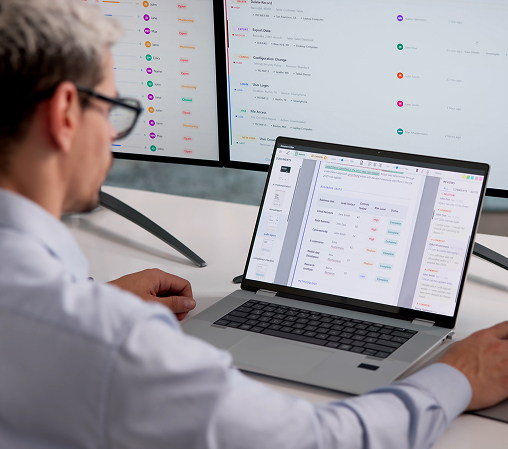
Getting Teams Phone right requires more than turning on a license. We design the Direct Routing architecture, configure the SBC, provision E911, and build a clean call routing structure that's documented and maintainable.

  • We conduct a current-state inventory of your voice environment, including SIP trunks, number inventory, analog lines, call routing logic, and device base.
  • We design the Direct Routing or Operator Connect architecture and configure the appropriate SBC.
  • We build and test E911, including location policies, nomadic 911, and emergency calling notification.
  • We validate call routing logic, auto attendants, queues, hunt groups, and document and test everything before go-live.

MSTeamsreplacephonesystem-9-2

Teams Phone Troubleshooting and Support

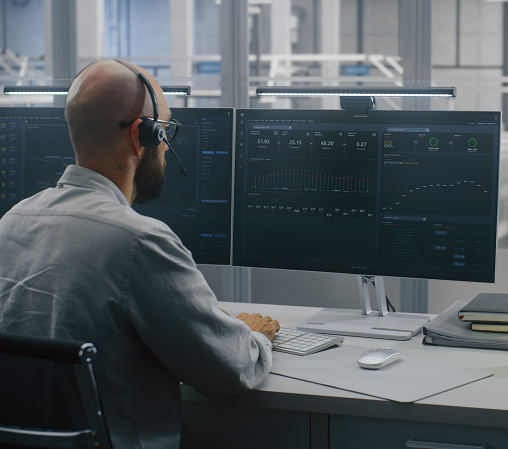
Troubleshooting Teams Phone issues is different from SIP because you're reading TLS sessions, Microsoft's Call Quality Dashboard, SBC logs, and the HTTPS API layer. We know how to read that environment, so we can:

  • Analyze SBC logs to find where calls are failing in the Direct Routing path.
  • Assess your network for TLS/HTTPS choke points that affect Teams voice differently than SIP.
  • Test E911 call flows and validate location policies, especially for remote and nomadic users. 
  • Debug call routing logic to figure out why calls aren't landing where they should. 
MSTeamsreplacephonesystem-9-3

Teams Phone Replacement Optimization

Once you're running, there's usually work to do to optimize the experience and integrate with other systems. Our engineering experts will:

  • Set up call quality monitoring using Microsoft's Call Quality Dashboard and Teams Admin Center analytics.
  • Integrate with contact center or CRM platforms where Teams' native routing doesn't fully cover the requirement.
  • Optimize hybrid coexistence when you're running Teams Phone in offices while maintaining analog systems elsewhere.
  • Consolidate SIP trunks, rationalize carrier relationships, and clean up excess PSTN capacity.
Frequently Asked Questions

Common Microsoft Teams Replacement Questions, Answered

Get quick answers to common questions about Teams Phone migration, replacement, and Direct Routing.

For most organizations, yes. Teams Phone includes auto attendants, call queues, voicemail, call forwarding, hold, transfer, park, and shared line appearance. Where it falls short is sophisticated call routing at the contact center level, analog device support, and some specialized PBX features that legacy platforms have accumulated over decades.

Direct Routing is how you connect Teams Phone to your existing SIP trunks and PSTN infrastructure. It requires a certified session border controller that translates between the SIP/UDP world of your carriers and the TLS/HTTPS world Teams uses for call control.

Getting this right is the most technically involved part of a Teams migration, and it's where many DIY projects run into trouble. ECG can step in to ensure your SBC is set up correctly from the start.

Microsoft Teams is replacing legacy PBX systems, hosted VoIP platforms, and Skype for Business. Teams Phone can handle most standard office telephony use cases that those platforms used to cover. For more complex call center or specialized voice scenarios, you may need additional integrations on top of Teams.
While Teams Phone has leading-edge E911 support, including dynamic location services that identify the specific floor or area a call is coming from, it can be tricky to configure. You need to provision dispatchable locations, set up location policies for nomadic users, configure emergency calling notifications under Kari's Law, and test the whole flow. Most of the work is in the setup and testing, which ECG can handle on your behalf.

Teams Phone is not designed for analog locations natively. Conference room phones, overhead paging, elevator emergency lines, and door entry systems all need an analog gateway. It's not a deal-breaker, but it adds cost and complexity.

If you have a lot of analog locations, that's worth a serious conversation before you commit to Teams. ECG can assess your environment and recommend the right migration option for your specific needs.

Longer than most people expect. Number porting is usually the biggest variable. Coordinating across carriers, dealing with partial rejections, and managing the cutover window where you run two systems in parallel can stretch things out.

At ECG, we've also seen migrations affected by the need to document existing call routing logic that nobody had written down. Plan for several months from start to finish.

You can do a phased migration using Direct Routing, which involves moving departments or locations gradually while keeping your old system running in parallel. The trick is managing the parallel cutover window carefully so that callers reach the right system.

ECG can help you design that phased approach so you're not doing a risky big-bang cutover.

Operator Connect is generally not open to new participants unless you're providing coverage in new or obscure locations. If you're a voice service provider, talk to Microsoft about your specific situation. For most new entrants, it's not a realistic path at this point.

Ready to Experience the ECG Difference?

Get in touch for products that support your crucial voice infrastructure needs.