AI monitoring has become an operational necessity for telcos, voice service providers, ISPs, and large enterprises managing complex infrastructure. But as networks evolve and threats become more advanced, traditional monitoring and network security tools can no longer keep up.
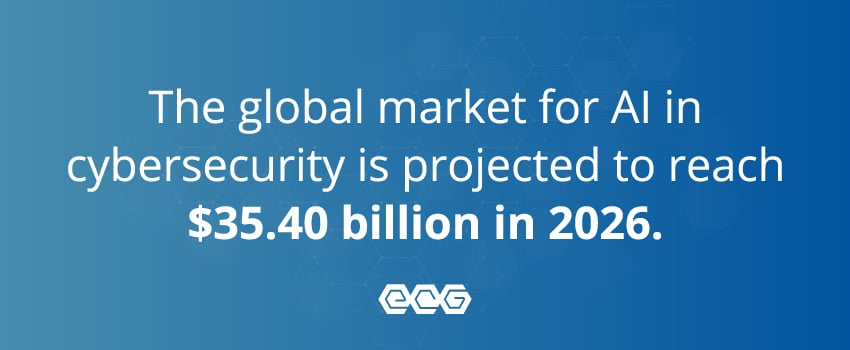
AI monitoring meets these challenges by delivering fast, accurate network security across large-scale environments in real-time, which could be why the global market for AI in cybersecurity is projected to reach $35.40 billion in 2026.1 Read on to learn how AI monitoring works, its role in network security, and tips for evaluating the best AI monitoring systems for your environment.
What Is AI Monitoring?
AI monitoring uses artificial intelligence and machine learning to analyze and respond to threats across IT environments. Where traditional infrastructure monitoring relies on preconfigured rules to trigger alerts, AI monitoring systems learn from real-time and historical data to detect anomalies before they can disrupt services.
Most current AI monitoring systems are based on machine learning (ML) moreso than large language models (LLMs). While LLM-based network monitoring can be valuable, they're not currently proven in production environments.
While each provider uses different technology, deploying ML to keep an eye on the network is now a proven strategy. For example, Parallel Wireless uses ML to monitor 100% of the data parameters in its telco radios to achieve these benefits for Open RAN,3 while Cox Communications uses ML to analyze operational data in the same way.4
Why Use AI for Network Security and Monitoring?
Traditional monitoring tools cannot process the volume and velocity of data at the speed threats move, nor can they distinguish important signals from background noise. Practically, this is because the cost of analysts who can constantly retune monitoring thresholds is so high. AI network monitoring solves this by:
Processing Data at Scale
Telecom and ISP networks generate massive volumes of data every second. AI monitoring tools are uniquely suited to process this data at scale, identifying patterns that would take human analysts hours – or even days – to spot. So what typically happens is that humans have to detect a problem after the outage occurs, and then build special monitoring triggers to detect it when it happens in the future.
Smarter Anomaly Detection
AI excels at identifying subtle deviations from baseline behavior. For example, a sudden spike in east-west traffic between internal systems might go unnoticed in a rules-based system. An AI monitoring system can flag it as a possible lateral movement attempt by an attacker.
Reduced Alert Fatigue
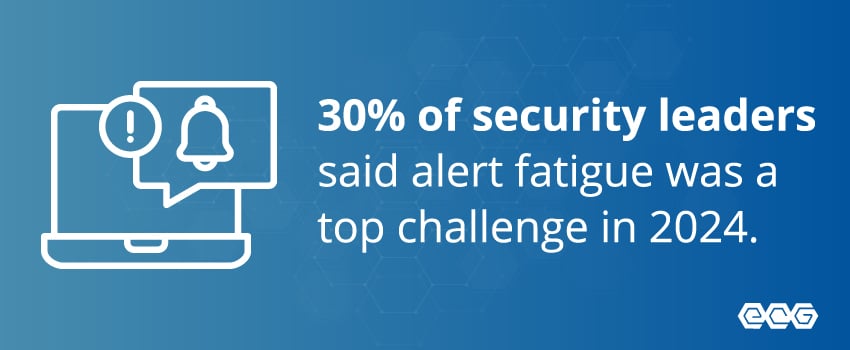
In a 2024 survey, 30% of security leaders said alert fatigue was one of their top challenges.2 But while traditional network security tools bombard teams with false positives, AI-based alerting systems correlate data across multiple sources to deliver higher-fidelity alerts so that your team can prioritize critical incidents and avoid burnout.
Rapid Threat Mitigation
In some cases, AI security monitoring platforms can automatically trigger responses, such as isolating a compromised endpoint, based on learned threat patterns, reducing mean time to resolution (MTTR).
Top Features To Look for in AI Monitoring Tools
When evaluating AI monitoring tools, telcos and large enterprises should look for solutions that align with their security and operational priorities. Core features to consider include:
- Real-Time Analytics: Your AI monitoring system should continuously analyze logs, telemetry, and behavioral data. In regulated environments, being able to capture and correlate real-time insights can be the difference between containing an incident and notifying thousands of customers of a breach.
- Customizable Baselines: AI for network security and monitoring lets you define behavioral baselines based on your architecture and risk profile so that alerts are actually relevant to your environment and not based on generic templates.
- System Integration: Look for AI monitoring tools that integrate with your current SIEM, firewall, endpoint detection, and cloud tools. Seamless integration creates a unified view across hybrid environments and supports centralized security operations.
- Automated Response: AI monitoring systems can automatically trigger containment actions, such as isolating endpoints, blocking malicious traffic, or revoking compromised credentials, based on threat patterns.
- Explainable AI (XAI): Security teams need to trust AI-driven decisions. Choose tools that provide transparency into why a particular behavior was flagged – so analysts can validate and act with confidence.
At ECG, we work with organizations to integrate AI monitoring into existing infrastructure monitoring and alerting systems. Our network engineering experts ensure your tools are aligned with industry best practices and fine-tuned to detect threats in your unique network.
Use Cases for AI Security Monitoring
AI monitoring can address challenges across multiple industries, including:
Telcos and Mobile Carriers
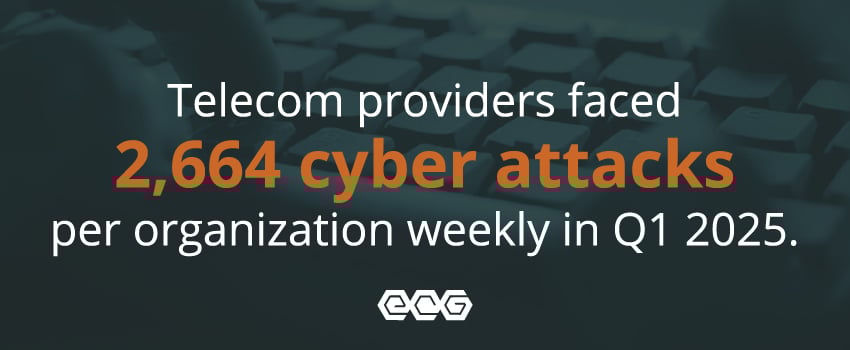
Telecom providers faced 2,664 cyber attacks per organization weekly in Q1 2025 – a 94% increase from 2024.5 AI monitoring tools can help telcos block fraud and protect user data at scale by identifying unusual call volumes, geographic impossibilities, or unauthorized access attempts.
Voice Service Providers
VoIP infrastructure is a frequent target for toll fraud, spoofing, and DDoS attacks. With AI network monitoring, providers can detect unusual call volumes, latency spikes, and unauthorized access attempts across their hosted PBXs and SBCs.
Internet Service Providers (ISPs)
ISPs manage traffic across thousands – or millions – of endpoints. AI monitoring systems analyze customer traffic to spot malware-infected devices and protect core infrastructure from distributed attacks.
Government and Enterprises
State agencies and large logistics enterprises (think FedEx or UPS) depend on AI monitoring to support compliance, protect data, and ensure critical uptime. And when regulatory requirements mandate detailed audit trails, AI monitoring provides the automated logging and correlation necessary to prove compliance.
5 Best Practices for Implementing an AI Monitoring System
Deploying AI monitoring across a large-scale network requires careful planning. Here are some tips to help you get started:
1. Align With Existing Infrastructure
Integrate AI with your existing IT infrastructure monitoring tools to gain comprehensive visibility across your endpoints and applications. Traditional infrastructure monitoring provides baseline metrics on system health, while AI monitoring adds threat detection and behavioral analysis on top of that foundation.
2. Combine AI With Expert Oversight
AI accelerates threat detection, but network security still needs human validation. Adverse events and anomalies have to be identified and tagged so they aren’t included in the training data as "healthy network." Use AI monitoring to surface high-priority events, then turn to experienced analysts or managed services partners like ECG to investigate and respond.
3. Continuously Train Your AI Models
Machine learning models are only as good as the data they’re trained on. Choose tools that adapt to your environment and allow you to retrain models. Continuous retraining helps your AI monitoring stay effective as threats evolve and your network changes.
4. Prioritize Alert Management
Without clear policies, AI-generated alerts can cause chaos. Help your teams respond consistently by defining alert management workflows that include escalation paths, auto-remediation triggers, and audit logging. At ECG, we help our clients navigate these challenges by combining AI monitoring with centralized alert management.
5. Validate and Tune Before Full Deployment
Establish a pilot phase to validate the new AI monitoring system before a full rollout. During this period, tune your detection models, establish behavioral baselines, and refine alerting thresholds for your environment. Organizations that skip this phase often experience alert overload or missed detections when moving to production.
Need Expert Help With AI Monitoring?
AI monitoring is now a critical layer in modern network security. But deploying and optimizing an AI monitoring system takes more than just picking the right tool. It demands thoughtful integration with existing systems, precise tuning for your environment, and organizational alignment so your team can execute at speed.
At ECG, we help service providers and large enterprises build monitoring frameworks that keep critical infrastructure secure. Whether you’re deploying AI for the first time or optimizing your existing AI monitoring tools, we’ll help you:
- Design and implement AI monitoring systems tailored to your architecture
- Integrate with on-prem, cloud, and hybrid environments
- Build an alerting strategy aligned to your NOC/SOC workflows
- Meet compliance and audit trail documentation requirements
- Manage and respond to alerts for 24/7 network security
Need help aligning your AI monitoring strategy with your network security goals? Let's talk.
Sources:
- https://www.precedenceresearch.com/artificial-intelligence-in-cybersecurity-market
- https://kpmg.com/kpmg-us/content/dam/kpmg/corporate-communications/pdf/2024/2024-kpmg-cybersecurity-survey-findings.pdf
- https://www.parallelwireless.com/products/performance
- https://digitalcxo.com/article/digitally-transformed-cox-communications-network-automation-success
- https://blog.checkpoint.com/research/q1-2025-global-cyber-attack-report-from-check-point-software-an-almost-50-surge-in-cyber-threats-worldwide-with-a-rise-of-126-in-ransomware-attacks