Carrier-grade voice communications continue to move away from traditional analog systems in favor of SIP phones. The SIP phone market is forecasted to reach $3.3 billion by the end of 2025,1 likely driven by the need to deliver scalable, flexible voice solutions. Cellular SIP-based solutions contribute to this by bringing the SIP phone into every mobile device.
But what is a SIP phone, and why has it become the standard for so many telecom and large enterprise networks? In this guide, we’ll break down how SIP phone systems work, the different types available, and what technical teams should consider when deploying them at scale.
TL;DR
-
A SIP phone is a VoIP endpoint that uses SIP for call control, registering with a SIP server or PBX while voice and video typically travel over RTP. A "Phone" may not be a physical phone as exited in the 1980s - instead of can be software that runs on your PC, or it can be an eSIM in your mobile device that configures the SIP software in a smartphone.
-
SIP phone systems can be on-prem or cloud-hosted, and calls follow a predictable flow (INVITE, SDP negotiation, RTP media, BYE), with routing over internet, MPLS, VPN, or private fiber.
-
SIP phones are often preferred in multi-vendor environments because SIP is an open standard, and they come in multiple forms including hard phones, softphones, video endpoints, and wireless devices.
-
IP phone means it runs over an IP network, VoIP phone means it carries voice over IP (SIP or proprietary), and a SIP phone is a VoIP/IP phone that specifically uses the SIP standard for signaling and interoperability.
What Is a SIP Phone?
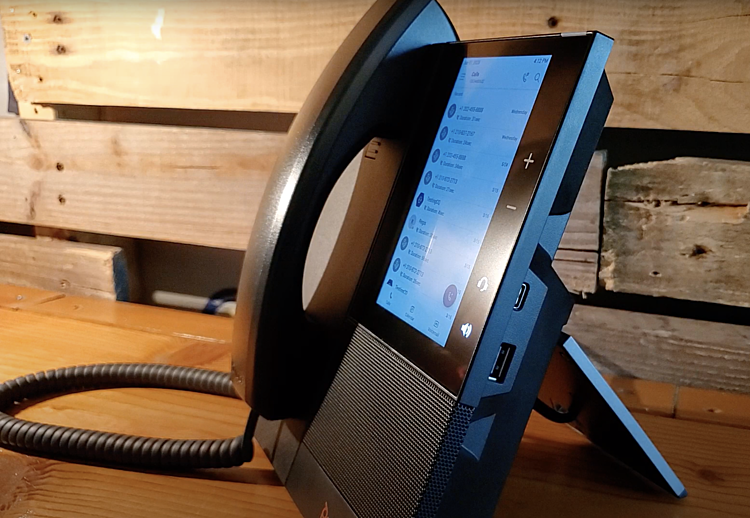
A SIP phone is a voice-over-IP (VoIP) endpoint that uses the Session Initiation Protocol (SIP) to manage voice or video calls over an IP network. Unlike legacy analog phones that connect through the PSTN, SIP phones rely on IP connectivity to reach other devices and services.
There are two main types of SIP phones: hardware-based, which are physical desk phones with SIP firmware, and software-based (softphones), which run on a computer or mobile device. The software inside a modern smartphone, iPhone, or Android, is a type of SIP phone. Both types register with a SIP server and use standard SIP messages to handle call setup, negotiation, and teardown.
ECG supports large-scale SIP phone installations by designing the configuration files and device management systems to enable activation of new SIP phones for a service provider. We also support eSIM integration, which allows cellular/mobile networks to connect to VoIP platforms. Plus, ECG can customize and brand SIP software to match the needs of enterprises and service providers.
How Does SIP Phone Work?
SIP phone systems work by connecting phones to a SIP service provider or PBX, which may be run on-premises (a data center you run) or hosted in the cloud (a data center run by someone else). Each phone registers with the server and is assigned a unique extension or direct-dial number.
Whenever a user places a call:
- The SIP phone sends a SIP INVITE message to the SIP server.
- The server locates the destination and relays the request.
- Once accepted, the phones negotiate codecs and media via SDP.
- RTP streams carry the voice or video between endpoints.
- When the call ends, a SIP BYE message tears down the session.
Depending on the network architecture, SIP traffic can be routed over the public internet, MPLS, VPN tunnels, or private fiber.
Cybersecurity is a major concern for SIP phones and must be addressed. Device management is often the first target for attackers, since gaining a SIP phone configuration would allow an attacker to perform a "SIM swap" equivalent and take over a user’s service. This could lead to a loss of privacy or fraudulent use of the services.
Apart from device management, SIP phones use SIP REGISTER, which is subject to other types of attacks that can potentially exploit weak SIP authentication credentials. And finally, once calls are happening, attacks like RTP bleed and RTP injection must be managed using SBCs and server implementation and configuration.
SIP Phone Service vs. Traditional VoIP Phones
Not all VoIP phones use SIP; some use proprietary signaling protocols that lock users into specific platforms. For example, many collaboration ecosystems aren’t SIP-native end-to-end, even though they may support SIP endpoints through gateway models. Microsoft Teams, for instance, can enable core calling on compatible SIP devices through Teams SIP Gateway, allowing organizations to preserve SIP phone investments while adopting Teams calling workflows.
SIP phone service is based on an open standard, which allows for interoperability between devices, servers, and platforms from different vendors.
This makes SIP phones the only choice for organizations that use multi-vendor environments or manage distributed systems. Voice service providers, ISPs, and enterprise IT teams can deploy SIP phones across various hardware, UCaaS platforms, and SBCs with consistent behavior. It also makes SIP phones the standard for service providers, large and small, who want to offer a variety of phones to their clients.
Some VoIP phones use proprietary protocols that lock users into specific platforms, but SIP phones are based on an open standard.
SIP Phones vs. PBX, UCaaS & Collaboration Apps
A SIP phone is the endpoint, but it’s only one part of a broader voice architecture. In most environments, SIP phones register to a call control system, which can be an on-prem PBX/softswitch or a cloud-hosted UCaaS platform. That platform handles extensions, routing, voicemail, policy enforcement, and integrations. The SIP phone handles signaling, negotiates media, and delivers the user experience.
This distinction matters when teams modernize voice. “Moving to the cloud” doesn’t always mean replacing every endpoint, and “standardizing endpoints” doesn’t always mean standardizing platforms. Many organizations keep SIP phones while changing the platform behind them, or keep the platform while upgrading how endpoints are managed and secured. The best path depends on scale, operational ownership, and how much control you need over provisioning, policy, and troubleshooting.
It also matters when voice is tightly tied to a collaboration environment. Some ecosystems can support SIP endpoints via gateways while still using a different internal model for identity, features, and device experience. Teams SIP Gateway is one example of this approach for compatible SIP devices.
Types Of SIP Phone Systems
Different environments call for different SIP telephone types. Here are the most common options:
Hard SIP Phones
These are physical desk phones that function like traditional telephones but include an Ethernet port and embedded SIP firmware. They usually support PoE (Power over Ethernet), multiple lines and extensions, and wideband audio codecs like G.722.
Hard SIP phones are commonly deployed in NOCs, call centers, and office environments where users need a dedicated, always-on device. You can typically find them in reception areas, kitchens, break rooms, and manufacturing facilities where wireless communication may not be reliable.
Soft SIP Phones
Softphones are applications installed on a PC, Mac, tablet, or mobile device and rely on the host device’s microphone and speakers. The most common softphone is actually running inside every smartphone. Modern cellular networks that use 4G LTE or 5G operate SIP-based architectures to provide voice service.
Softphones are primarily used in remote work setups and mobile support teams. They also integrate with UCaaS dashboards, CRM tools, or collaboration apps, making them ideal for modern, integrated phone systems.
Video SIP Phones
Some hard SIP phone systems support video calling. These devices include integrated cameras and video codecs (e.g., H.264) and are typically used in executive offices, telemedicine, or high-touch customer interactions.
Wireless SIP Phones
A wireless SIP phone uses Wi-Fi or DECT instead of Ethernet to connect. This makes them helpful for use on warehouse floors, in hospitals, or on enterprise campuses where users need constant mobility and communication.
Wireless SIP phones connect over Wi-Fi or DECT, making them ideal for enterprises that require mobility.
How Do Businesses Use SIP Phone Systems?
Let’s explore common SIP phone examples and where businesses deploy them:
- Yealink T5 Series: Seen in carrier-grade deployments for ISPs and regional providers.
- Apple Native Dialer: Installed in every iPhone is the native dialer, a SIP client that registers with the cellular network service provider through a specification of SIP called IMS. VoIP providers can integrate other mobile phones using the IMS specification, or through a standard SIP register using an integration provider like Tango Extend.
- Cisco 9000 and 8800 Series: Popular in government and educational institutions, often used with CUCM or BroadWorks. Their US origin makes them popular, so you'll spot these on the Resolute Desk at the White House.
- Poly VVX Phones: Common in hosted VoIP platforms, integrating well with Zoom Phone or Microsoft Teams SIP Gateway.
- Zoiper Softphone: Used by enterprises that need mobile, secure voice on BYOD devices.
- Grandstream WP810: A wireless SIP phone often found in healthcare or warehouse settings.
Each device supports SIP signaling and RTP media streams, but the form factor and features vary to fit different deployment needs. Keep in mind that many modern phones are built on Android, which requires special care for security.
5 Benefits of SIP Phone Systems
Whether deployed by a regional voice service provider or a state government IT department, SIP phone systems offer several advantages to businesses. These include:
1. Platform Interoperability
SIP’s open protocol allows seamless interoperation between voice platforms like Cisco CUCM, BroadWorks, Metaswitch, NetSapiens, PortaOne, Microsoft Teams, Metaswitch Perimeta, and Oracle SBCs. As a result, organizations can use SIP to deploy phones across multiple systems as needed.
2. Reduced Infrastructure Costs
SIP phones eliminate the need for analog gateways, PRI lines, or legacy PBX hardware. Plus, a single SIP trunk can support multiple concurrent calls, and centralized provisioning simplifies large-scale deployments – all of which adds up to lower deployment costs.
SIP phones eliminate the need for analog gateways, PRI lines, or legacy PBX hardware.
3. Advanced Features
SIP phones support modern features like:
- Presence and BLF (Busy Lamp Field)
- Secure calling with TLS and SRTP
- NAT traversal with SBCs or using ICE (STUN & TURN)
- Wideband audio for better call clarity
- Remote provisioning via HTTPS with Mutual TLS support
- Remote logging and diagnostics to support troubleshooting from a remote location (so technicians rarely have to visit an individual phone)
These features make SIP phones ideal for carrier and enterprise-grade voice deployments.
4. High Resilience
SIP phone service can route around outages using SRV failover, DNS load balancing, or geo-redundant SBCs. They can also auto-re-register to a backup server if the primary fails, reducing downtime.
ECG frequently designs high-reliability networks and integrates fault tolerance setups using DNS, SBCs, IP address sharing, BGP routing, and SD-WAN, ensuring that end users experience the best possible experience with their SIP phones.
5. Increased Flexibility
SIP phones give organizations more control over how and where voice services are delivered. Teams can mix and match hard phones, softphones, and wireless SIP devices based on user roles, without requiring changes to the infrastructure.
What To Consider When Deploying a SIP Phone System
Deploying SIP phone systems at scale – especially across telco or ISP networks – requires detailed planning. Important factors to consider include:
Provisioning & Endpoint Control At Scale
At a small scale, provisioning looks like “enter credentials and make a call.” At carrier or enterprise scale, provisioning is a control plane. It determines how phones enroll, how they’re authenticated, how firmware is governed, and how quickly you can recover from misconfiguration or compromise.
Centralize provisioning to reduce drift. A centralized provisioning model lets you distribute firmware and configurations consistently across thousands of endpoints. DHCP Option 66 can help automate initial setup, but it should be treated as a bootstrap mechanism, not the entire security story.
Secure the management plane first. Attackers don’t need to break media encryption if they can steal or alter provisioning data. If an adversary can access device configurations or enrollment workflows, they can redirect registrations, capture credentials, or impersonate endpoints. Restrict management access, use encrypted transport, audit changes, and reduce the blast radius of any one compromised device identity.
Plan firmware governance like a release pipeline. Phones are software products. They ship updates, regress, and occasionally introduce new risk. A scalable approach treats firmware as a controlled rollout: staged deployment, compatibility checks, rollback plans, and validation on real networks.
Deployment Planning Checklist
- Codec Planning: Avoid transcoding where possible. Choose devices that natively support your preferred codecs (e.g., G.711, G.729, Opus).
- Firewall & NAT Rules: SIP phones behind firewalls must use proper NAT handling. Consider an SBC at the service provider network edge for secure traversal and media anchoring.
- Provisioning: Use a centralized provisioning platform for endpoint/device management to distribute firmware and configurations. DHCP Option 66 can help automate setup.
- QoS Configuration: In some networks, tag SIP and RTP traffic with proper DSCP values and ensure layer 2 QoS is respected across switches and routers. Or use SD-WAN to prioritize voice traffic through the standard Internet.
- Security: Use TLS and SRTP, restrict access to unused interfaces, and keep firmware updated to reduce exposure to known vulnerabilities. ECG helps service providers provide full security using tools like Mutual TLS (mTLS) device management.
Without proper safeguards, SIP phones can expose your network to attacks or service disruption.
Since SIP phones are internet-connected endpoints, they can expose your entire network to attacks or service disruption without proper safeguards. Taking the time to plan each of these areas is essential for protecting your infrastructure and delivering high-quality voice services.
Call Quality Engineering & Troubleshooting Signals
A SIP phone can be registered and still deliver a poor experience. Voice quality is more sensitive than most applications because it’s real-time, bidirectional, and human-perceptible. If latency climbs, jitter spikes, or packet loss becomes inconsistent, users won’t describe it as “network impairment.” They’ll describe it as “the phones are bad.”
Validate Readiness Before You Roll Out
A reliable deployment starts with network readiness. For remote users, the biggest surprises are often Wi-Fi contention, VPN routing, and last-mile congestion. For campuses and service-provider networks, the common issues are queueing under load, asymmetric paths, and misapplied QoS markings. ITU-T guidance also highlights how end-to-end one-way delay affects conversational quality, and includes planning guidance that one-way delay should generally be kept within an upper bound of 400 ms.
Monitor What Matters Once Calls Are Live
If you support voice at scale, you need visibility across the call path, not just “up/down” status:
- Registration behavior (including re-register storms during outages)
- Codec selection patterns and renegotiation behavior
- RTP statistics (loss, jitter, reordering) and where impairment begins
- SBC telemetry and policy decisions that impact media anchoring and NAT traversal
Troubleshoot Faster With Signaling Plus Media
When users report one-way audio, clipped speech, robotic voice, or delayed talk-over, the fastest path to resolution is to correlate three views: signaling, media, and routing. A SIP ladder trace can show what the system negotiated. RTP/RTCP stats show what happened on the wire. Routing and QoS validation confirms whether voice traffic received the treatment you designed for it.
Emergency Calling & Location Readiness
For enterprises and government environments, SIP phone deployment isn’t only about features and cost. Emergency calling requirements can drive architecture choices, endpoint strategy, and operational processes.
In the United States, Kari’s Law requires multi-line telephone systems to support direct 911 dialing (without prefixes like “9”) and to provide an on-site notification capability when 911 is dialed. RAY BAUM’S Act introduces “dispatchable location” expectations for certain 911-capable services, including interconnected VoIP, with the goal of getting responders a usable address plus additional location details when applicable.
Practically, this becomes more complex as mobility increases. Softphones, hoteling desks, shared workspaces, and remote staff can all break naïve location assumptions. If your environment requires emergency location compliance, treat it as an engineering domain: define ownership, validate how location is assigned and updated, test alerts and routing, and ensure the design holds up during outages and failover.
Optimize Large-Scale SIP Phone Systems With ECG
SIP phones are at the foundation of modern IP voice networks. Their flexibility, scalability, and interoperability make them essential for any business delivering telecom services, whether you're supporting call centers, municipal networks, or federal IT systems.
At ECG, we help voice service providers, ISPs, and government agencies deploy, troubleshoot, and optimize SIP phone systems at scale. If you need expert engineering guidance – from secure provisioning to end-to-end call path analysis – we’re here to help.
Reach out to the ECG team today to talk about how we can support your SIP deployments.
SIP Phone FAQs
How does SIP trunking differ from a SIP phone?
A SIP phone is an endpoint used by a person or team to place and receive calls. SIP trunking is a service that connects a phone system (such as a PBX or cloud platform) to external calling networks. The phone is the device, while trunking is part of the upstream calling architecture.
What is a SIP phone service?
A SIP phone service is a voice service that uses SIP for call setup and control, typically delivered through a service provider or a PBX/UCaaS platform. It defines how endpoints register, how calls route, and which features and policies are available to users.
What is the difference between a SIP phone and a VoIP phone?
VoIP is the umbrella term for voice delivered over IP networks. A SIP phone is a type of VoIP endpoint that uses SIP as its signaling protocol. Not all VoIP phones use SIP, but SIP is the most common open standard for interoperability across vendors and platforms.
How can I get maximum reliability from my SIP phone?
Reliability comes from the whole system: stable network paths, correct QoS treatment for voice, resilient call control, and secure provisioning. At scale, prioritize redundancy (DNS/SBC strategy and failover), keep firmware controlled and current, and monitor both signaling and RTP media so you can detect quality drift before users report it.
Do SIP phones work with cloud phone systems?
Yes. SIP phones commonly register to cloud-hosted platforms the same way they register to on-prem PBXs. The key is ensuring device compatibility, secure onboarding, and a network path that supports real-time voice.
Are SIP phones secure by default?
They can be secure, but they aren’t secure automatically. Security depends on how you manage the endpoint and provisioning plane, how authentication is handled, and whether transport and media protection are enforced (for example, encrypted signaling and secure media where required).
Why do SIP calls sometimes have one-way audio?
One-way audio is usually a media-path problem, not a dialing problem. NAT behavior, firewall rules, asymmetric routing, or SBC policy can allow signaling to succeed while RTP fails in one direction. Looking at SIP negotiation plus RTP stats usually pinpoints where the media broke.
Do softphones count as SIP phones?
Yes. A softphone is a SIP phone implemented in software on a PC or mobile device. The tradeoff is that audio quality and reliability become more dependent on the host device, local network conditions, and how mobility is handled.
What’s the biggest deployment mistake teams make?
Treating SIP phones like plug-and-play endpoints without building a provisioning and lifecycle model. At scale, configuration control, firmware governance, and identity management are what keep rollouts stable and secure.
When should I use Ethernet vs Wi-Fi for SIP phones?
If a role is mission-critical (reception, dispatch, NOC, high-volume agents), wired Ethernet is usually the most predictable option. Wi-Fi can work well, but it needs clean RF conditions, controlled contention, and consistent QoS behavior to avoid jitter and packet loss during busy periods.
Sources: