Over half (52%) of companies report that phones are still their primary communication tool, and 63% expect their phone usage to increase over the next few years.1 But as more businesses move toward digital solutions, the shift from traditional phone systems to internet-based communication solutions has become inevitable.
SIP and VoIP often come up in the process of modernization efforts. While closely related, they’re not the same – and understanding how these technologies differ is essential for voice service providers to develop the right product offerings. In this guide, we'll break down the difference between SIP and VoIP and how ECG can help you determine which solutions to offer your customers.
What Is VoIP?
VoIP, or Voice over Internet Protocol, is a technology that enables voice calls through internet connections rather than traditional, copper-based phone lines. Also referred to as "UC" or "unified communications,” VoIP changes voice signals into digital data that travels across IP networks, allowing businesses to make calls just as they would send other data across the internet.
Around 18% of businesses globally used VoIP/UC solutions in 2023,2 likely due to its greater affordability, flexibility, and ease of use. Instead of maintaining separate networks for voice and data, VoIP lets businesses use a single network for multiple communication services, ultimately reducing complexity and operational costs.
A quick clarification on UC: Unified communications is typically the broader umbrella. It combines voice plus capabilities like video, messaging, presence, and collaboration tools. VoIP is the “voice transport” foundation that many UC platforms rely on.

What Is SIP?
SIP, short for Session Initiation Protocol, is a communication protocol that establishes, maintains, and terminates multimedia sessions like voice and video conferencing. VoIP is the general technology for making calls and transmitting voice data, while SIP is the specific protocol used to initiate and manage the call itself.
SIP is often used as shorthand for "SIP trunking," but as a protocol, it is used for many other purposes. It offers a standardized method for connecting calls and managing their lifecycle. It supports voice calls, video, messaging, and other real-time communications, making it a crucial part of cloud-based telephony platforms.
SIP vs VoIP: Compared
SIP and VoIP may seem interchangeable at first glance, but they serve distinct roles. Here’s a quick breakdown:
Purpose and Function
VoIP is the technology that enables voice transmission over the internet, allowing users to make phone calls without needing copper analog or digital phone lines or infrastructure.
SIP is the protocol used to initiate and terminate VoIP calls. It establishes the connection, maintains it during the call, and disconnects it once the call ends. SIP trunking uses the SIP protocol to connect directly to a PBX or other device – often without replacing the PBX itself.
Scope
VoIP primarily focuses on voice communication, though modern VoIP systems often include additional capabilities like video calling.
SIP, on the other hand, falls under the hood of many everyday communications technologies. As a technology, it supports voice communication (like VoIP) plus video conferencing, instant messaging, and presence information.
Cost Structure
Since VoIP represents the overall technology for voice transmission, costs are typically based on the number of lines, usage volume, and selected features. VoIP and UC pricing models usually include monthly subscription fees covering a specific number of users or lines.
SIP is the connection method, so costs are generally structured around the number of channels rather than individual users. SIP trunking often follows a pay-for-what-you-use model, allowing businesses to scale channels based on actual call volume.
Implementation
There are several deployment options for VoIP or UC, including cloud-hosted services requiring minimal hardware or on-premises systems that need more extensive equipment investment.
SIP requires specific configuration and involves establishing connections between your client’s phone system and your network through proper networking protocols.
With SIP trunking, your clients connect their PBX or application to your network, and need to decide on details like transport protocol (UDP, TCP, or TLS), codecs for delivering the audio (G.711, G.729, or G.722 high definition), encryption for the audio (SRTP), number formatting (E.164 format "+12292442099" or simply national format "2292442099"), and other parameters. Because SIP is a basic protocol, it grants a lot of flexibility.
The Difference Between VoIP & SIP Trunking
Another common point of confusion is the difference between SIP trunking and VoIP. Both are needed for modern telephony, but they play different roles within a communications system:
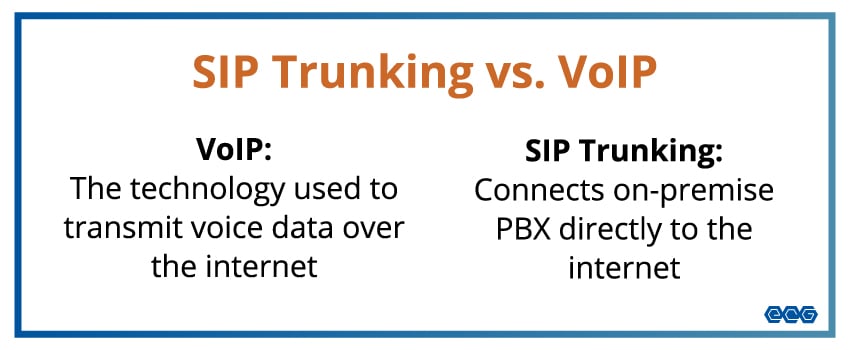
- VoIP: VoIP is the method communication systems use to transmit voice data over the internet. It can work with a variety of technologies, including SIP.
- SIP Trunking: SIP trunking is a specific type of SIP implementation that allows businesses to connect their on-premise phone systems (PBX) directly to the internet.
In short, VoIP is the technology, and SIP trunking is the method for businesses to integrate VoIP with their internal telephony systems.
How Are SIP Devices Used in the VoIP Ecosystem?
SIP devices are hardware or software that use SIP to manage communication sessions. Common SIP devices include:
- IP Phones: Physical phones that connect to the internet to make SIP-based calls.
- SIP Softphones: Software applications installed on computers or mobile devices to make SIP-based calls – essentially turning your laptop or smartphone into a VoIP device. In modern smartphones, the native dialer is considered a SIP softphone provided by companies like Apple and Samsung.
- SIP Gateways: Devices that bridge traditional phone lines and VoIP networks, enabling communication between them. A common example is an Analog Terminal Adapter (ATA), which can be used to connect a legacy device that uses copper 2-wire POTS connections and attach it to a VoIP network.
Businesses use SIP devices to leverage VoIP communications while maintaining flexibility and control. These devices serve as endpoints that encode and decode the voice data transmitted via VoIP technology, and organizations can mix and match different communication tools based on employee needs and work environments. For example, desk workers might use IP phones, remote staff could use softphones on laptops, and legacy systems can connect through SIP gateways.
Practical note for most deployments: In business environments, “SIP softphone” usually means a dedicated app that registers to your PBX or hosted platform, not just the default mobile dialer. That distinction matters when you’re planning authentication, provisioning, and support.
6 Reasons Your Customers Should Care About SIP and VoIP
Combining SIP and VoIP technologies delivers quite a few advantages for modern business communications, including:
1. Copper Sunset
For many customers in the USA, traditional copper-based analog or digital voice service is no longer affordable. SIP and VoIP technologies are a cost-effective alternative. In other areas, the legacy services continue to be available.
2. Greater Scalability
Growing businesses need a communications infrastructure that scales easily. SIP-based systems offer flexible solutions for adding users or features without major system overhauls, adapting to changing business requirements.
3. Lower Communication Costs
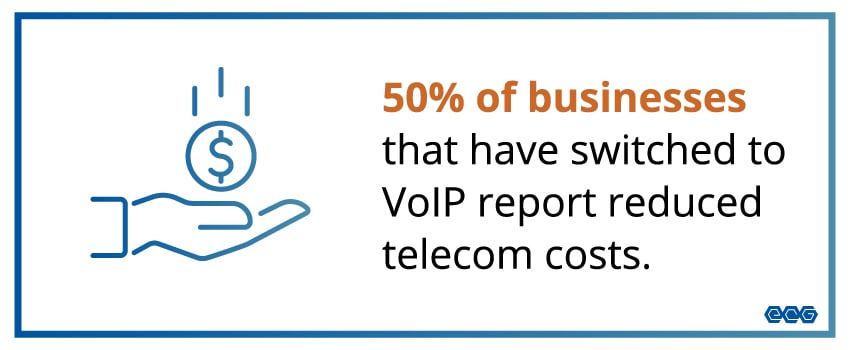
VoIP services can be significantly cheaper than traditional phone lines, with 50% of businesses that have switched reporting reduced telecom costs.3 Using a VoIP platform via SIP trunking is a cost-effective way for organizations to handle call volumes without investing in costly phone lines or hardware.
4. Improved Collaboration
SIP supports multimedia sessions, making it easier for teams to communicate via voice, video, and messaging – all integrated into one platform. This leads to more efficient collaboration across departments and with clients.
5. Increased Reliability
Both SIP and VoIP platforms can be more reliable than traditional telephony systems, especially when paired with modern network setups. Plus, a properly configured communications infrastructure helps businesses ensure higher uptime and better service quality.
6. Future-Proofed Infrastructure
With companies adopting more cloud-based solutions, SIP and VoIP technologies allow for future-proofing. VoIP eliminates dependency on traditional copper-wire infrastructure, while SIP provides the framework for unified communications.
Security, Fraud, & Trust in SIP & VoIP Deployments
Moving voice to IP is not just a feature upgrade. It changes the security model. The risks are different from legacy telephony, and the operational consequences can be bigger, especially for service providers carrying large volumes of calls.
Protecting SIP Signaling & RTP Media
SIP controls the call lifecycle, and RTP carries the audio. Both need protection, but they are protected in different ways. SIP signaling can be encrypted in transit using TLS, and audio can be encrypted using SRTP. This helps reduce eavesdropping risk and makes it harder for attackers to tamper with call setup.
Encryption matters, but it is not the whole story. A large percentage of real-world VoIP incidents are not about listening in. They are about abuse of access, routing, and billing.
Stopping Toll Fraud & Call Abuse
Fraud can show up as compromised SIP credentials, unauthorized registrations, account takeover, call pumping, or high-cost international routing abuse. It can also show up through weak dial plan rules or overly permissive outbound policies.
A strong protection approach includes tight authentication rules, restricted dialing, rate limits, and anomaly detection that flags behavior changes quickly. In provider networks, fraud controls are operational controls, not a checkbox.
Why SBCs Matter Beyond NAT Traversal
Session Border Controllers are often introduced as a solution for NAT and interoperability. In practice, they are also one of the most important security enforcement points in the voice network. An SBC can enforce policy, normalize signaling, control codec and transport negotiation, hide topology, and block patterns that are consistent with scanning or abuse.
If you are offering SIP trunking or managed VoIP services, SBC policy design is part of product quality.
Reliability & Architecture Patterns That Keep Voice Up
Voice is unforgiving. Minor degradation becomes noticeable fast, and outages become business emergencies. Reliability is less about a single feature and more about architecture, capacity planning, and predictable failover behavior.
Redundancy & Carrier Diversity
Resilient voice architectures avoid single points of failure. That can include redundant SBCs, redundant internet or access circuits, and carrier diversity for PSTN termination. The goal is not only uptime, but graceful degradation. When something fails, calls should reroute with minimal impact.
For multi-site customers, geographic diversity can matter as much as device redundancy. A single regional outage should not take down the entire voice service.
Failover Behavior & Call Routing Control
SIP-based designs can support multiple routing options, but only if failover is engineered and tested. This includes how registrations are handled, how alternate routes are selected when interconnects degrade, and how your platform reacts to bursts of signaling errors.
A healthy voice network is not one that never fails. It is one where failover works in a predictable, testable way.
Capacity Planning Beyond “Bandwidth”
Bandwidth is only one input. Providers and enterprises also plan for concurrent sessions, call setup rates during peaks, codec policy, and whether transcoding is happening in the path. Even “small” changes can multiply at scale, like shifting packetization settings or adding encryption overhead.
If you want consistent outcomes, you plan capacity like a voice network, not like generic internet traffic.
Emergency Calling & Why It Changes Design Decisions
Emergency calling is often treated as a detail. In real deployments, it can drive requirements that affect platform choice, endpoint configuration, and operational workflows.
Location Is The Hard Part
For fixed desk phones, location is usually stable. For softphones, remote workers, and mobile endpoints, location can change constantly. That creates risk if emergency calls route to the wrong PSAP or dispatch to the wrong address.
Organizations need a way to keep location information accurate and current. Providers need to support that outcome through platform capabilities and operational guidance.
Testing & Operational Readiness
Emergency calling is not something you assume is working. It is something you validate. That can include test calls, documentation, and clear internal procedures for what happens when location or routing data needs to be updated.
If you are building service offerings, emergency calling readiness is part of service maturity.
Migration Playbook: From PRI, POTS, or Legacy PBX to SIP & VoIP
Modernization is rarely a clean cutover. Most customers want to reduce risk, preserve what still works, and avoid disruption.
Choosing A Migration Path
Some customers want to keep their PBX and modernize connectivity. For them, SIP trunking is often the fastest path. Others want to replace infrastructure and move to a hosted VoIP or UC platform. The right answer depends on the age of the PBX, feature needs, internal IT capabilities, and how much change the organization can handle at once.
A good offering makes both options possible and helps customers choose based on reality, not hype.
Cutover Sequencing & Numbering Strategy
Migrations typically involve number porting, dialing plan cleanup, and call flow alignment across sites and departments. Normalizing numbering formats is one of the simplest ways to prevent avoidable issues, especially across international footprints or mixed legacy environments.
The operational goal is a staged cutover with a rollback plan, not a single high-risk switch.
Common Failure Modes To Plan Around
Most VoIP problems are predictable. NAT and SIP ALG behavior can break calls. Codec mismatches can hurt quality. DTMF handling can fail in IVR paths. Fax and legacy analog devices can create surprises if gateways or signaling settings are not tuned for them.
A migration plan that anticipates these issues will ship faster and generate fewer support escalations.
How to Monitor and Improve VoIP Call Quality
While SIP and VoIP can provide many advantages to your business customers, their effectiveness will largely depend on your underlying voice network infrastructure. Here are a few strategies to improve your network’s call quality:
Ensure a Robust Network
VoIP quality is fundamentally determined by your network performance. Maintain high call quality by engineering sufficient backbone bandwidth, minimizing network latency, and controlling jitter across your infrastructure. Implement QoS policies that prioritize voice traffic across your entire network path.
When interconnecting with partner ISPs or transit providers, establish performance SLAs and regularly validate their network capabilities. If a particular interconnection point experiences congestion, reroute traffic through alternative paths to maintain call quality.
Use SIP Monitoring Tools
Deploy network-wide SIP monitoring solutions that provide real-time visibility into call quality metrics. These systems should collect data on MOS scores, packet loss, jitter, and latency across different network segments and customer groups. Make sure to implement automated threshold alerts to identify emerging issues before they affect customer experience.
Test VoIP Quality Regularly
Conduct systematic quality testing across your network using automated call generators and analyzers. These tests should simulate traffic under varying network conditions and from different locations in your service footprint.
First, you’ll need to establish baseline performance expectations for different network paths and monitor for deviations. If you detect quality issues, implement remediation processes with clear escalation procedures. Maintain communication channels where customers can report quality issues, and correlate these reports with your m to identify patterns requiring major network improvements.
SIP vs VoIP: Which Should You Offer?
Both SIP and VoIP offer many benefits to businesses looking to streamline their communication infrastructure. Understanding the difference between SIP and VoIP – and how each can work for your voice service customers’ specific needs – can help you develop competitive offerings.
If you're evaluating your service catalog strategy, ECG can help you determine whether to sell SIP trunking, VoIP solutions, or a combination of both. We’ve helped service providers and enterprises of all sizes develop robust VoIP and SIP services, so you can rest easy knowing we offer the engineering expertise and support you need to deliver scalable, reliable, and cost-effective solutions to your customers.
Book a consult today to get started.
SIP vs VoIP FAQs
Can existing phone systems integrate with SIP or VoIP platforms?
Yes, in many cases. SIP trunking is often used specifically to connect an existing PBX to IP-based voice networks without replacing the PBX itself. For older analog environments, gateways and ATAs can bridge legacy endpoints into a VoIP ecosystem. The key is confirming what your current system supports and designing the right interop plan, including codec, transport, security, and dialing rules.
What security measures protect VoIP communications?
Strong VoIP security typically combines signaling and media protection with operational controls. On the protocol side, TLS helps protect SIP signaling and SRTP helps protect audio. On the operational side, you reduce fraud risk with strict authentication, dial plan restrictions, rate limits, anomaly detection, and SBC policies that block suspicious behavior. Security is strongest when it is designed into the service, not bolted on after incidents.
Is SIP necessary for effective business communication?
Not always. Many businesses can meet basic voice needs with a hosted VoIP service where the provider abstracts the underlying signaling complexity. SIP becomes more important when you need flexibility and control, like integrating with an existing PBX, supporting complex call routing, enabling unified communications features, or scaling large voice environments in a predictable way.
Is SIP trunking the same as VoIP?
No. VoIP is the broader technology category for transmitting voice over IP networks. SIP trunking is a specific implementation approach that uses the SIP protocol to connect a PBX or application to external calling networks. Many real-world deployments use both together, with VoIP carrying the voice and SIP trunking providing the “connection path” to the PSTN and external numbers.
Which is more cost-effective, SIP trunking or VoIP?
It depends on the customer’s environment and usage. Hosted VoIP often uses per-user pricing and can be cost-effective for organizations that want quick deployment with minimal internal management. SIP trunking commonly prices by concurrent channels and can be more cost-effective for businesses with an existing PBX, predictable call volume, or higher concurrency needs. Total cost of ownership should include support effort, hardware lifecycle, and growth plans.
Do small businesses need SIP trunking or VoIP?
Many small businesses do well with hosted VoIP because it is simple to deploy and maintain. SIP trunking can still make sense if a small business already has a PBX they want to keep, needs specific call routing control, or expects higher call concurrency. The best fit is usually determined by what they already own, what they need next, and how much technical management they want to take on.
Can VoIP work without SIP?
Yes, VoIP can work without SIP. SIP is common, but it is not the only signaling approach used in voice over IP systems. Some platforms use other protocols internally or abstract signaling entirely from the customer. That said, SIP is widely adopted because it is standardized, interoperable, and flexible, especially in provider-grade deployments and SIP trunking scenarios.
How many SIP channels does a business actually need?
Channel planning depends on concurrency, not headcount. A business with many employees may still have low simultaneous calling, while a support-heavy operation may have high concurrency. A practical approach is to evaluate peak call patterns, include growth and seasonal buffer, and validate assumptions using call detail records or monitoring data. Providers often right-size channels over time as real traffic patterns become clearer.
What are the most common causes of poor VoIP call quality?
The usual culprits are latency, jitter, packet loss, and congestion along the voice path. One-way audio can also be caused by NAT issues, SIP ALG behavior, or mismatched media settings. Codec selection, packetization, and transcoding can impact quality too, especially at scale. The fastest path to consistent quality is network engineering plus monitoring that catches degradation early.
What is an SBC, and do customers really need one?
An SBC, or Session Border Controller, is a control point that manages SIP sessions at the edge of a voice network. It helps with interoperability and NAT traversal, but it is also a security and policy enforcement tool. For many business and provider deployments, an SBC is essential for predictable routing, fraud protection, normalization, and service stability. Whether it is delivered as a managed service or deployed directly, it is often part of a mature SIP offering.
Sources: