Telecom networks are more complex than ever, with cellular providers, voice service providers, and ISPs managing millions of devices, dozens of interconnected systems, and thousands of employees trying to deliver service 24/7. Meanwhile, customer expectations keep rising, and margins keep tightening.
Agentic AI will change this equation. Instead of hoping your team catches problems before customers do, autonomous AI systems detect and fix issues in real time. Rather than having customers wait on hold while agents search multiple systems for answers, AI agents instantly access the data needed to resolve issues.
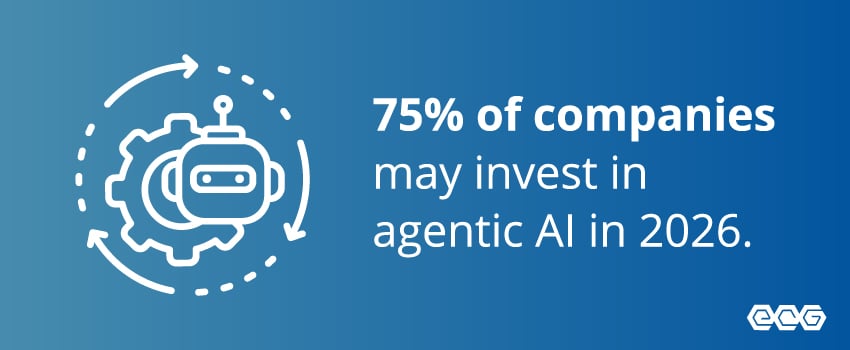
Experts predict that as many as 75% of companies may invest in agentic AI in 2026. For leaders at major carriers, voice service providers, ISPs, and large enterprise IT departments, understanding agentic AI deployment is becoming essential for building the operational foundation needed to compete.
So let's paint a picture of the future – and talk about steps to get to true agentic AI in telecom.
Understanding Agentic AI for Telecom
Agentic AI differs fundamentally from traditional AI systems. While conventional AI provides insights or recommendations that require human interpretation and action, agentic AI observes environmental conditions, makes decisions, and takes action autonomously. These systems learn from outcomes and continuously refine their approach without waiting for human approval at every step – though at first they should usually be made to pause and get approval before taking important steps.
Today, successful agentic AI means that clear specifications and test cases are part of the "prompt" – the standing orders. The agent tries different methods to achieve the specifications and to allow all the tests to pass. Then, when it has a plan, it proposes that plan to humans to approve the final step, where any risks are concerned.
For telecommunications operators, this autonomy means:
- Faster incident resolution
- Lower human workload performing routine upgrades and testing
- More efficient resource allocation
- Better customer experiences
For example, when a SIP Gateway experiences degradation, traditional monitoring systems would send an alert that an engineer must manually investigate and correct. During that interval, call quality suffers. With agentic AI, the system detects degradation, analyzes patterns across dozens of data sources, identifies the root cause, and autonomously corrects the configuration or deactivates a failing component.
Agentic AI Use Cases in the Telecom Industry
Current industry data shows that 61% of telecom executives believe AI will fundamentally change their industry, with leading operators already moving beyond pilots into production deployments.
Agentic AI for Telecom Network Operations
Modern networks generate massive telemetry data that exceeds human monitoring capacity. Autonomous network agents continuously analyze performance metrics across thousands of elements, identifying anomalies before they impact service.
Key benefits across network operations could include:
- SIP Trunk Quality Management: Voice service providers see immediate problems when jitter or packet loss appears on SIP trunks. Agentic AI should correlate issues across CDRs, network flow data, and device logs to identify the root cause in seconds, then adjust routing policies, rebalance traffic, or modify codec selections to restore call quality. The key concept is that the agent doesn't have to be pre-programmed with a list of steps, but would have training data, including the same kinds of training and experience that another engineer would have. Then it applies that experience to the problem at hand, potentially trying multiple methods.
- Predictive Maintenance Scheduling: Agents should forecast component failures based on historical patterns and current performance trends, allowing maintenance teams to schedule replacement during planned windows rather than responding to unplanned outages.
Compliance with internal operational procedures is a key concern. Retrieval Augmented Generation (RAG) is one technique that some products are integrating to ensure the resolution and changes follow documented procedures and practices acceptable across the network. Left unrestricted, different runs of the AI agents will lead to a wide variety of inconsistent configurations, but with guidelines, the AI agents can follow established rules.
The combination of continuous AI monitoring and autonomous response means network problems get resolved in minutes instead of hours, significantly reducing the impact on customers and operations teams.
Agentic AI Telecom Use Cases in Customer Experience
Unlike basic chatbots, agentic AI customer service systems can understand context, remember interactions, and orchestrate complex workflows across backend systems. Key benefits across customer operations include:
- Connectivity Issue Resolution: When ISP subscribers report connectivity issues, agents immediately access network monitoring data to determine where the problem stems from. Agents then execute appropriate remediation without escalation.
- Technical Support for Voice Service Providers: Agentic AI enhances support by integrating technical knowledge with real-time system data. When business customers report call quality problems, agents analyze CDRs, compare against normal patterns, and identify whether issues relate to network conditions, endpoint configuration, or SIP trunk capacity – analysis that traditionally requires escalation to senior technical staff.
- Revenue-Driving Personalization: Agents can analyze usage patterns and customer lifecycle stages to identify genuine opportunities for service upgrades that benefit customers. Personalized recommendations convert at substantially higher rates than traditional marketing campaigns.
- Internal IT Automation: Large enterprise IT departments benefit from agents that handle internal service requests such as adding extensions, configuring call forwarding, and setting up conference bridges without human IT intervention.
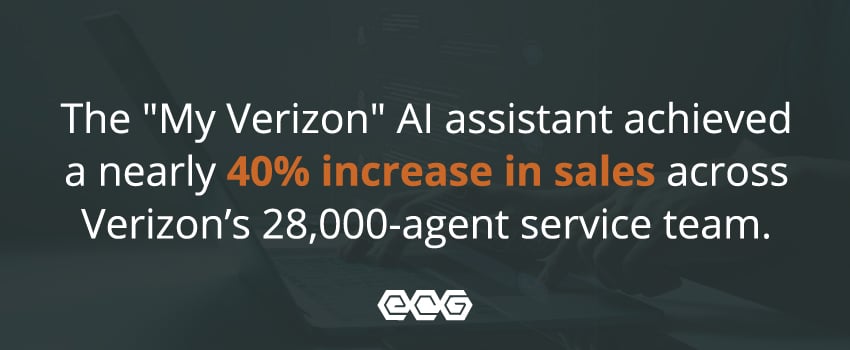
Results from early voice AI implementations demonstrate the approach's effectiveness. For instance, Verizon's "My Verizon" app AI assistant, developed with Google Cloud, achieved a nearly 40% increase in sales across its 28,000-agent service team.
Agentic AI Use Cases in Telecom Field Service
Field service scheduling combines multiple competing variables: technician skills, availability and location, parts inventory, customer priority, SLA requirements, weather, and traffic conditions. We foresee agentic AI systems orchestrating this entire service lifecycle, continuously optimizing schedules to minimize drive time, maximize first-time fix rates, and meet customer commitments.
Key benefits across field service operations:
- Schedule Optimization: Agentic AI could consider technician availability, skills, location, parts inventory, customer SLAs, and external factors like weather and traffic to create optimal daily schedules.
- Improved Customer Satisfaction: Large ISPs managing thousands of daily appointments reduce wait times while improving first-time fix rates through continuous schedule optimization.
- Knowledge Capture and Improvement: AI-powered tools like Wingman capture technician reports from repairs, structure the information, and feed it into enterprise systems where tickets and tracking occur. When technicians describe repairs and findings, this knowledge can become available to diagnostic systems, improving future troubleshooting accuracy and enabling predictive failure identification.
Agentic AI helps field service will help operators reduce the time technicians spend driving, improve their ability to meet customer commitments, and build increasingly sophisticated diagnostic capabilities that prevent future service failures.
Agentic AI in Telecom Industry Integration Strategy
Successful agentic AI implementations will integrate with existing systems rather than replacing them. They should strategize and then get approval – at first. This technique is called “Human in the Loop,” or HITL. Telecom environments include multiple OSS/BSS platforms, network management systems, CRM software, and specialized monitoring tools developed over the years. Agentic AI functions as an intelligent orchestration layer, coordinating across these investments through APIs and standardized protocols.
Reduce implementation risk by:
- Making agents work in a real lab environment first, to test plans out, before proposing changes to the production environment.
- Starting with narrow use cases like automating routine configuration tasks or handling common customer inquiries, then expanding capabilities as the organization develops operational expertise. Agents can plan the configuration tasks and get human approval at a much faster speed than doing the work with manual procedures.
- Achieving speed and consistency across manual workflows. Agentic AI can orchestrate workflows programmatically, completing in seconds what takes humans minutes or hours while eliminating transcription errors. Look for RAG systems to achieve compliance and consistency with existing procedures.
- Deploying incrementally across systems. Connect to existing OSS/BSS, CRM, and monitoring platforms through APIs rather than replacing established infrastructure.
- Managing configuration autonomy through strict guardrails, human-in-the-loop processes, detailed audit logs, and clear boundaries around autonomous actions to ensure agents operate safely within defined parameters.
- Maintaining compliance through data quality assurance, security frameworks, and audit trails that meet regulatory requirements for telecommunications operations.
For cellular providers and ISPs serving enterprise or government customers, data sovereignty requirements may necessitate on-premises deployment. Hybrid architectures that deploy domain-specific agents locally while maintaining central orchestration balance compliance requirements with operational efficiency.
Wingman: Bridging Voice and Agentic AI
Our Wingman platform provides AI-powered call recording, transcription, and automation specifically built for telecommunications providers.
Wingman captures the content of voice communication, so it can be used in enterprise systems. For example, if deployed for customer service, Wingman can capture the discussions of the problem, the symptoms, the tests taken so far, and log that to the proper customer service platforms. That becomes part of the input data that can be considered by agentic platforms used for network management.
Without Wingman, tribal knowledge would otherwise be lost. When technicians discuss findings from voice network troubleshooting, Wingman transcribes and structures information for agentic AI systems that optimize future maintenance and predict similar failures.
We built Wingman specifically for telecommunications compliance, so it supports flexible deployment models and offers built-in protections supporting HIPAA, GDPR, and state call recording laws. Integration capabilities extend to HubSpot, Zendesk, and Slack, ensuring insights from voice conversations flow automatically to systems where they create value.
MCP, Langchain, Langgraph, Autogen – Key Tools for Agentic Development
When you’re building new agentic systems, it’s good to know the key technologies.
Langchain & Langgraph build the logical connections and sequencing of agentic operations. They allow you to define ground rules, such as the documents and standard information used to control LLM operations.
MCP standardizes the way agents and resources are accessed, so agents can discover and use available APIs.
Autogen is a powerful way to build multi-agent automations and workflows.
Get Started With Agentic AI in Telecom
Successful agentic AI adoption requires developing operational processes defining how humans and autonomous agents work together, establishing governance frameworks ensuring agents operate within acceptable boundaries, and building monitoring capabilities that provide visibility into agent actions.
Integrating platforms like Wingman with broader agentic AI systems creates particularly compelling opportunities for voice service providers and carriers, transforming the voice channel from a cost center into a strategic asset that makes organizations smarter.
At ECG, we help telecom operators navigate these decisions based on decades of voice and data network experience. Whether you're a cellular provider evaluating agentic AI for network operations, a voice service provider enhancing customer experience, or an enterprise IT department seeking to do more with constrained resources, we identify the right starting point.
Ready to explore how agentic AI can transform your telecommunications operations? Contact ECG today to get started.